
The real harm of social media does not come from comparison alone. It comes from duality. Duality means living in two psychological realities at the same time. One reality is what people show online. The other is what they actually live. The mind struggles when these two realities stay separated for too long.
Social media turns this separation into a daily experience. A person learns to perform one version of life while privately carrying another. This inner split is where silent suffering begins.
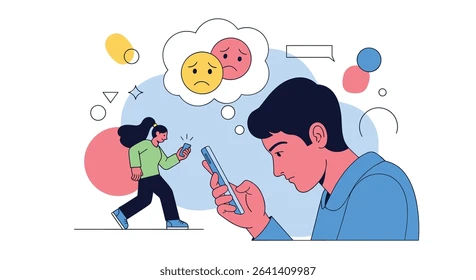
The Dual Self Created by Social Media
Social media slowly divides identity into two parts. One part exists for display. The other exists in private. Both feel real, but only one is acknowledged.
The Presented Self vs the Lived Self
The presented self is selective, controlled, and acceptable. It shows success, calm, happiness, or progress. The lived self carries doubt, fear, confusion, exhaustion, and failure. The problem is not having two selves. The problem is being allowed to express only one.
When the lived self has no space to exist, emotional pressure builds.
Why the Mind Cannot Merge These Two Selves
The human mind needs coherence. When actions, emotions, and identity align, the mind feels stable. Social media rewards misalignment. People act happy while feeling lost. Over time, the brain experiences this as internal conflict, not social behavior.
This conflict is often felt as anxiety, emptiness, or quiet despair.
Comparison as a Trigger, Not the Root
Comparison does not cause suffering by itself. It activates the already divided self. What hurts is not seeing others succeed, but feeling unable to be honest about struggling.
Why Comparison Feels Personal Even When It Is Not
The mind compares its hidden reality with others’ visible reality. This is an unequal comparison. The brain does not register that it is comparing full life to fragments. Emotion reacts before correction appears.
This is why comparison feels unfair but still powerful.
The Silent Question People Do Not Ask Aloud
The unspoken question is not “Why are they better?”
It is “Why can I not live openly as I am?”
This question stays unanswered, and silence becomes emotional isolation.
Silent Suffering as a Result of Psychological Splitting
When people cannot integrate their inner and outer selves, they stop sharing honestly. Silence becomes a coping strategy.
Why Expression Feels Risky
Social platforms teach people what is rewarded and what is ignored. Vulnerability feels unsafe because it disrupts the presented self. Over time, people lose language for their own pain.
Suffering becomes internal, unnamed, and heavier.
Why Being Understood Matters More Than Being Seen
Visibility does not equal connection. The mind relaxes only when it feels understood. Without understanding, attention feels empty. This is why someone can be surrounded by interaction and still feel deeply alone.
Resolving Duality Instead of Escaping Social Media
The solution is not total withdrawal. It is integration.
Restoring Psychological Unity
Relief comes when the lived self is allowed to exist somewhere safely. This may be through private conversations, writing, or spaces without performance pressure. When expression becomes honest, inner conflict reduces.
The mind does not need perfection. It needs consistency.
Why Integration Reduces Emotional Pain
When inner experience and outer expression align, comparison loses power. The brain no longer defends a false identity. Emotional energy returns to processing life instead of maintaining appearance.
This is how silent suffering begins to loosen.
Core Understanding
Social media intensifies suffering not because people compare, but because it encourages psychological duality. A divided self carries more pain than a struggling whole self and can lead to suicide. Healing begins when both sides of experience are allowed to coexist.